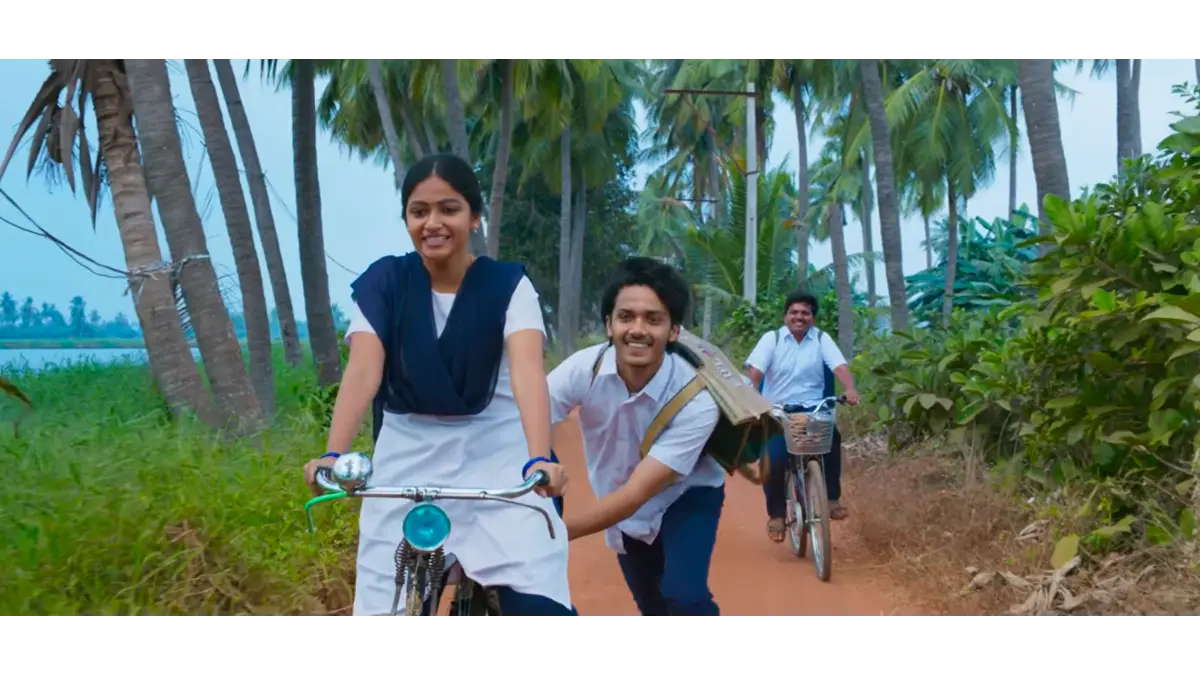
Thella Kaagitham
Verdict: A sincere teenage romance with a relevant message that starts engagingly but loses pace in the second half. Worth a watch for fans of youth dramas, though expectations should stay moderate.
Pros:
- Natural chemistry between the lead pair
- Catchy songs and warm rural visuals
- Genuine performances from Harsh Roshan and debutant Nakshatra
Cons:
- Second half feels stretched and melodramatic
- Predictable writing and uneven emotional impact
About Thella Kaagitham 2026
| Detail | Information |
|---|---|
| Title | Thella Kaagitham |
| Directed by | Ramesh Bandreddi |
| Written by | Nandu Savirigana |
| Produced by | Krishna Kommalapati |
| Cast | Harsh Roshan, Nakshatra, Ajay, Sharanya Pradeep, Deepak Mali, Rajkumar Kasireddy |
| Cinematography | K. V. Guhan |
| Music by | Vijai Bulganin |
| Production Companies | Arunachala Creations |
| Release Date | 2 October 2026 |
| Country | India |
| Language | Telugu |
| Genre | Drama, Romance, Musical |
| Censor Rating | UA16+ |
Thella Kaagitham hit theatres on 2 October 2026 as a Telugu teenage romantic drama. Directed by debutant Ramesh Bandreddi and produced by Krishna Kommalapati under Arunachala Creations, it stars Harsh Roshan (known for Court) opposite newcomer Nakshatra. Set in a small town Andhra backdrop around the mid-2000s, the film follows two intermediate students navigating first love and its unexpected consequences.
BookMyShow shows strong early audience ratings, with many tagging it as rocking or inspiring, while critic scores mostly land in the 2–3 out of 5 range. Social media chatter on X and elsewhere reflects a split response praise for the youthful energy mixed with notes on pacing issues. The story centres on Ramu, a middle class boy raised by his elder brother, and Asha, who comes from a relatively better off family.
Their school friendship slowly turns into young love filled with the usual awkwardness, fun moments with friends, and innocent excitement. A single impulsive decision leads to a life-changing situation that forces the pair to confront fear, family pressure, and the gap between teenage freedom and adult responsibility. The film stays grounded and avoids heavy sensationalism while focusing on communication between parents and children.
On X, many viewers highlighted the first half as the strongest section. Users repeatedly praised the light-hearted school and college sequences, the lead pair’s chemistry, and comedy moments involving Deepak Mali that drew genuine laughs in theatres. Harsh Roshan’s natural portrayal of an impulsive yet confused teenager and Nakshatra’s confident debut drew consistent compliments.
Songs by Vijai Bulganin, especially the melodies, and K. V. Guhan’s warm capture of rural locations also earned positive mentions. Common complaints centred on the second half. Several posts and reviews noted that the narrative stretches one conflict too long, becomes repetitive, and leans into melodrama that dilutes the emotional punch.
Some felt the message about caution and parental openness is relevant but delivered in an old-fashioned style that lacks the depth needed for stronger impact. Overall sentiment sits in the mixed-to-average zone: audiences who connected with the nostalgic youth vibe and the climax found it passable or better, while others called it a one-time watch that loses steam after interval.
Families and younger viewers who enjoy simple coming-of-age stories set in small-town Telugu settings will likely respond best. The film’s strengths lie in its sincere performances, pleasant music, and honest attempt at a socially relevant theme.
Its weaknesses uneven pacing, predictable turns, and limited emotional intensity keep it from standing out. It is a reasonable theatrical choice if you want a light to emotional youth drama this weekend, especially with friends or family. Those preferring tighter storytelling may prefer waiting for streaming, where the message still lands without the full runtime pressure.
Disclaimer: This review is based on publicly available audience reactions and discussions on X at the time of writing. Individual opinions may vary.