Verdict: Without Blood is a slow, dialogue-heavy drama carried by strong performances from Salma Hayek and Demián Bichir, but its thin story and rushed ending leave many viewers feeling unmoved.
Pros:
Salma Hayek and Demián Bichir deliver genuinely powerful, emotional performances
Handsome cinematography and a haunting, understated score
Tackles heavy themes of war and trauma with sincerity, not spectacle
Cons:
The story feels thin and repetitive for its short runtime
The ending arrives abruptly, leaving key emotional beats underexplored
About Without Blood (2026)
Detail
Info
Title
Without Blood
Directed by
Angelina Jolie
Written by
Angelina Jolie (based on the novel by Alessandro Baricco)
Produced by
Angelina Jolie, Lorenzo De Maio
Cast
Salma Hayek Pinault, Demián Bichir, Juan Minujín
Cinematography
Seamus McGarvey
Music by
Rutger Hoedemaekers
Production Companies
Jolie Productions, De Maio Entertainment, Pistachio Pictures
Release Date
September 18, 2026 (United States)
Country
United States, Italy
Language
English
Genre
War Drama
Censor Rating
R
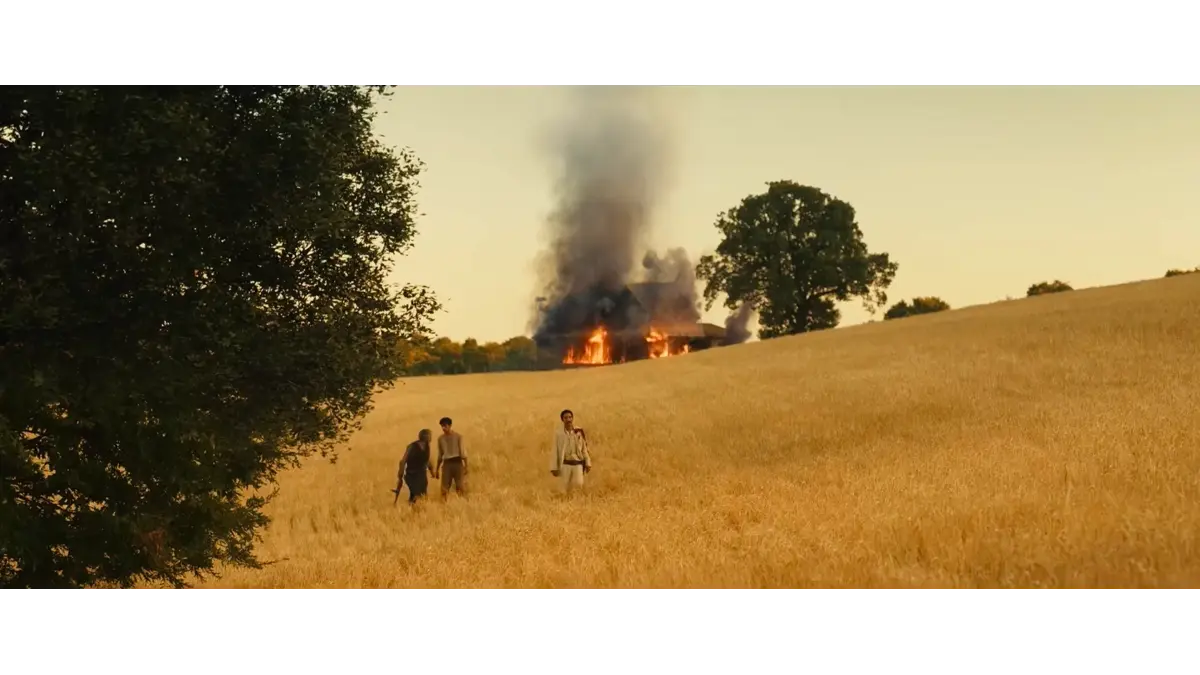
The film opens on a young girl named Nina, living a peaceful life with her father and brother in the countryside during an unnamed war. Her peace is shattered when armed men arrive looking for her father, killing both him and her brother while Nina hides beneath the floorboards.
Years later, an adult Nina, now played by Salma Hayek, tracks down Tito, one of the men connected to that day, who is now working a quiet job at a train station kiosk. Over the course of one evening, the two sit down together and slowly unpack the weight of their shared, painful history through conversation and flashback.
The film builds toward a reckoning between them, exploring questions of guilt, forgiveness, and what justice really means after violence.
Audience discussion around Without Blood on social media and review platforms has been fairly divided. A common thread of praise is for the two central performances.
Many viewers single out Salma Hayek’s portrayal of Nina as one of her most affecting dramatic roles in years, with Demián Bichir also earning credit for bringing quiet depth to Tito. Several posts mention being struck by the restrained, dinner-table style tension between the two actors.
On the technical side, people have appreciated the film’s visuals, calling the Italian countryside setting and the warm, nostalgic cinematography a highlight even when the story itself doesn’t fully land.
The most common complaint circling online is that the film feels thin stretched across its runtime, with some calling the pacing slow and the themes underexplored given the heaviness of the subject matter.
A number of viewers also flagged the ending as feeling rushed, arriving suddenly after a long, slow build-up. A smaller group of comments have been more critical of Jolie’s direction generally, feeling the film plays it safe rather than saying anything new about war and trauma. Overall sentiment leans toward “well-acted but underwhelming” rather than outright negative or overwhelmingly positive.
Disclaimer: This review is based on publicly available audience reactions and discussions on X at the time of writing. Individual opinions may vary.
Kadir is a box office reporter and film analyst from Hojai, Assam, and the founder of Tenvow.com. Since 2015, he has been into box office reporting. With a focus on box office collections, OTT trends, and movie analysis, Kadir delivers accurate, data driven insights into the business of films.